Legally Reviewed by Frank Marsalisi on August 31, 2026
Quick answer: Hurricane season increases crash risk on Florida roads through flooded intersections, downed power lines and dead traffic signals, gridlocked evacuation routes, storm debris in the travel lanes, and rain and spray that cut visibility to almost nothing. None of that automatically excuses a driver who causes a crash.
In St. Petersburg and across Tampa Bay, the Atlantic hurricane season runs from June 1 through November 30, and even a storm that stays offshore can rearrange local traffic for days. We represent drivers, passengers, cyclists, and pedestrians hurt in crashes throughout our personal injury practice areas, and that includes the storm-related collisions that spike every year across Pinellas County.
Why Hurricane Season Increases Crash Risk on Florida Roads
Ordinary bad weather makes driving harder. Hurricane season compounds several hazards at once, and each one changes how a crash happens and how fault gets analyzed afterward. Flooded roads hide the pavement itself. Power outages turn intersections into free-for-alls. Evacuation traffic packs bridges and highways with drivers who may be anxious, tired, or unfamiliar with the area. Storm debris ends up in travel lanes with no warning. Rain bands and spray from other vehicles can cut visibility to a few car lengths. Each of these risks deserves its own look, because the evidence that matters after a crash depends on which hazard was involved.
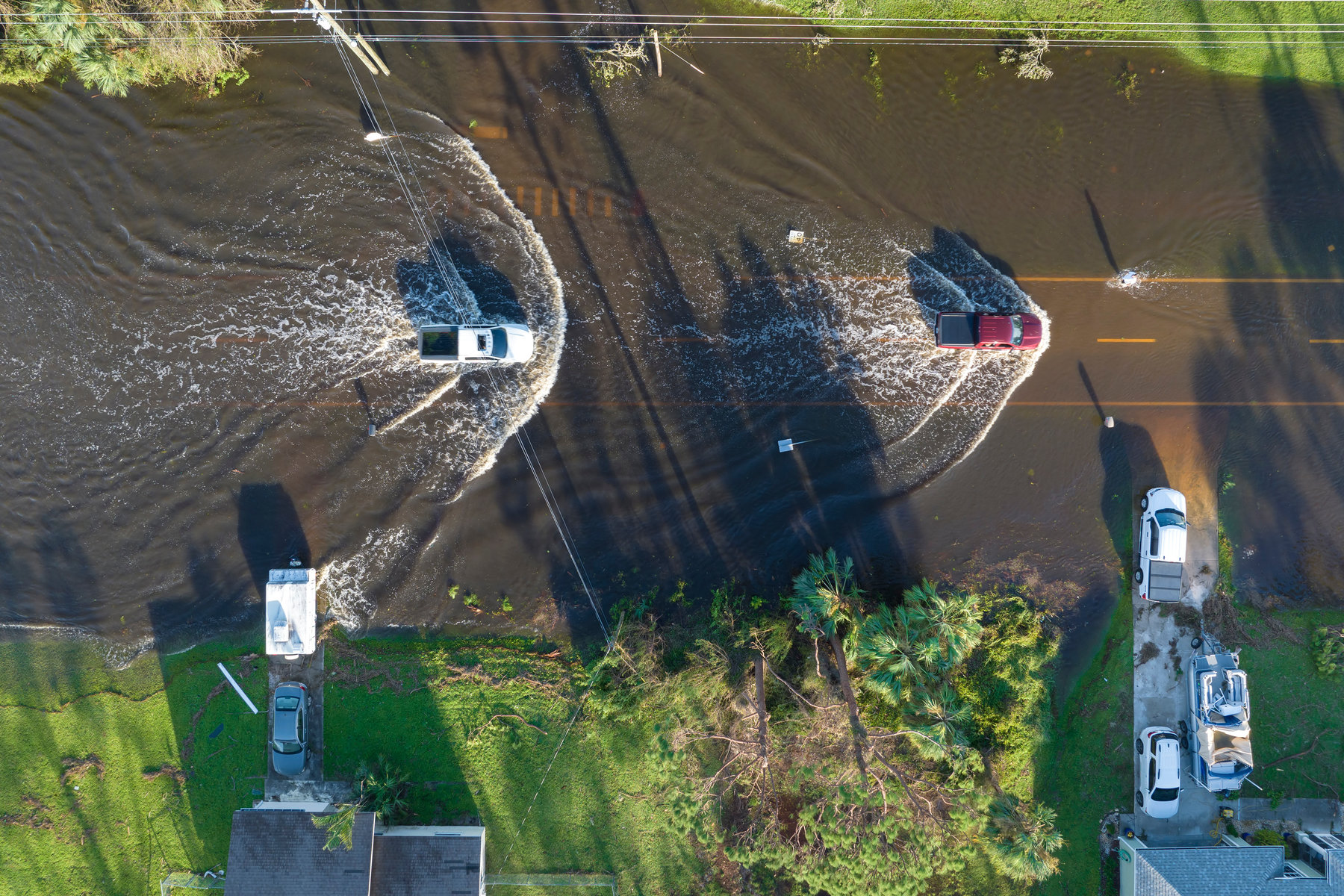
Flooded Roads Hide Real Hazards Beneath the Water
Standing water on a St. Petersburg street can look shallow and still hide a stalled car, a missing manhole cover, a washed-out shoulder, or debris carried in by the current. Water depth is nearly impossible to judge from the driver’s seat, and even a few inches of moving water can cause a vehicle to lose traction.
Flooding does not end when the water recedes. Sand, silt, glass, and branches often remain across the roadway for days, which can make braking and steering less predictable than a driver expects on a road that looks clear. We cover many of these same conditions in more detail in our review of Florida crashes caused by flooded roads and storm debris, including how fault gets evaluated when standing water is a factor.
Drivers are expected to slow down and, where possible, avoid entering flooded roadways altogether, since neither the depth of the water nor the condition of the road beneath it can be judged safely from a moving vehicle.
Downed Power Lines and Traffic Signal Outages
Hurricane-force wind and falling trees routinely knock out power across Pinellas County, and traffic signals are often among the first casualties. A downed power line across a roadway is its own hazard, since a line can remain energized and dangerous even after it has fallen. Drivers who encounter a line across the road should assume it is live, stay well clear of it, and report it rather than attempting to drive around or through it.
A dark intersection is arguably more dangerous than one with a working signal, because drivers respond to it inconsistently. Some treat it correctly as an all-way stop. Others hesitate in the middle of the intersection, creep through without stopping, or assume the car ahead of them already checked cross traffic. That inconsistency is exactly what produces T-bone crashes, pedestrian collisions, and chain-reaction wrecks at intersections that would otherwise be routine.
A missing or dark signal does not suspend the rules of the road. Florida law still expects every driver approaching that intersection to slow down, look for cross traffic, and yield appropriately, the same way they would at a stop sign.
Evacuation Traffic Creates Its Own Kind of Danger
When evacuation orders go out for Pinellas County, routes like I-275, Gandy Boulevard, US-19, Park Boulevard, and the bridges connecting the barrier islands to the mainland can turn from a normal commute into a bottleneck within hours. Drivers may be watching a fuel gauge, tracking a storm update on their phone, or traveling with pets, children, or elderly relatives and a car packed with belongings.
That combination raises the risk of rear-end crashes, aggressive lane changes, and crashes involving drivers unfamiliar with local roads, all compressed into traffic that is moving slower and stopping more often than usual. Some of these crashes stem from ordinary distracted driving, and stop-and-go evacuation traffic is exactly the setting where rear-end crashes tend to cluster.
Stress is not a legal excuse. Drivers evacuating ahead of a storm are still expected to maintain a safe following distance and adjust their speed to the traffic and weather conditions in front of them.
Storm Debris and Road Damage
Branches, roofing material, fence sections, garbage bins, and construction debris can end up in a travel lane with no warning after a storm passes through. A driver who swerves suddenly to avoid an object in the road, or who does not see it in time, can lose control or strike another vehicle.
Storm damage to the roadway itself compounds the problem. Potholes, washed-out shoulders, missing lane markings, and downed signage can all appear overnight, and these conditions tend to be especially dangerous for motorcyclists, cyclists, and pedestrians, who have less protection than someone inside a car.
More people also end up on foot or on a bike in the days after a storm, whether because a car was damaged, fuel was hard to find, or someone was checking on a neighbor or a property. That means drivers need to watch for pedestrians and cyclists in places, and at times, they might not expect them, especially where sidewalks are blocked by debris or streetlights are still out.
Reduced Visibility Before, During, and After the Storm
Heavy rain bands reduce visibility long before a storm makes landfall, and spray kicked up by trucks and other vehicles can blind a driver for a second or two at highway speed. Windshield wipers cannot always keep up with tropical downpours, and side windows fog quickly in humid, storm-charged air.
Visibility problems do not end with the rain. Streetlights knocked out by wind or falling limbs can leave entire neighborhoods dark well after the storm has passed, and drivers on those streets at night may not see a pedestrian, a cyclist, or a piece of debris until they are almost on top of it. Extra following distance and reduced speed matter as much in these conditions as they do during the storm itself.
How Fault Changes When a Storm Hazard Contributes to a Crash
Insurance companies often try to treat a storm as the whole explanation for a crash. A missing stop sign, a downed tree blocking a lane, or a dark traffic signal can genuinely make an intersection or roadway more dangerous, but Florida law does not treat a storm hazard as an automatic excuse for the driver involved.
We look closely at how fault is analyzed in exactly these situations in our broader discussion of who is liable in a Florida bad-weather crash, because the analysis is rarely as simple as blaming the storm.
A driver who drives through a dark intersection without slowing down, who fails to notice a downed tree in time to react safely, or who continues at a speed too fast for deteriorating conditions may still be found responsible, in whole or in part, for the resulting crash. Florida also follows a modified comparative negligence standard, meaning fault can potentially be divided between more than one party, including, in some cases, a government entity responsible for maintaining a road, signal, or sign, subject to Florida’s separate notice requirements and damage limits for claims against public agencies.
None of this means a hazard is irrelevant. It means the hazard is one piece of evidence, not the entire case.
What to Do Immediately After a Storm-Related Accident
Safety comes first. Get medical care if you are hurt, and call 911 if you need police or emergency assistance at the scene. If it is safe to do so, document the conditions around you before they change or get cleared away.
Consider saving the following if you are able:
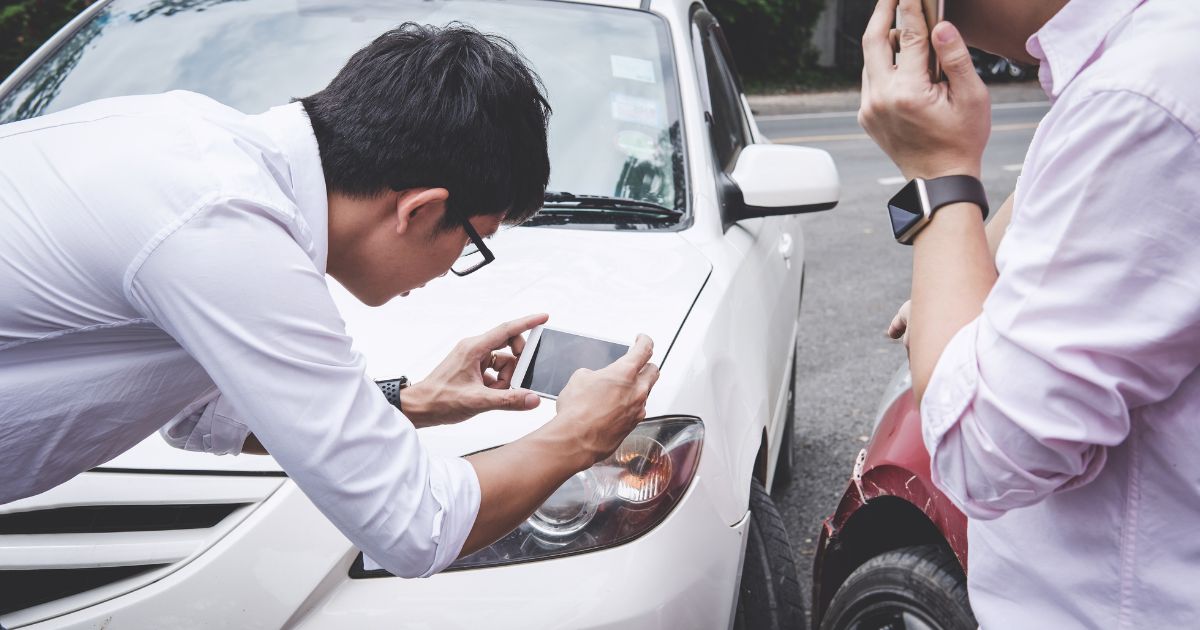
- Photos or video of the road conditions, standing water, debris, and vehicle damage
- Photos of any dark or damaged traffic signals and missing or downed signage
- The crash report and the other driver’s insurance information
- Names and contact information for any witnesses
- Screenshots of weather alerts, evacuation orders, or road closure notices from that day
- Medical records, repair estimates, and any tow or roadside assistance records
These details tend to matter more, not less, when a storm is part of the picture, since they are often the only record of conditions that get cleaned up or repaired within days.
How Insurance Claims Get More Complicated During Hurricane Season
Florida already receives a disproportionate share of the country’s catastrophe insurance claims, and an active hurricane season can multiply that volume within a single insurer’s book of business almost overnight. When storm damage claims surge, adjusters can end up managing far more files than usual, and an injury claim from a car crash can end up waiting behind property and flood claims filed in that same window.
That volume can show up as slower callbacks, delayed inspections, and adjusters who are quick to point to the storm as the reason a crash cannot be fully investigated yet. Trade coverage of past Florida hurricane seasons has documented this same pattern of claims backlogs and adjusting delays following major storms, particularly when two or more storms strike the state close together and property, flood, and injury claims arrive in the same stretch of weeks.
None of that changes what an insurer owes on a valid claim. It just means a claim filed during or right after a storm may need more documentation and more follow-up than one filed on an ordinary day.
How Our Firm Can Help After a Storm-Related Crash
Frank Marsalisi founded our firm to represent injured people throughout St. Petersburg and the greater Tampa Bay area, and storm-related crashes are a recurring part of that work every hurricane season. We know which Pinellas County intersections lose power first, which routes back up during an evacuation, and what kind of evidence tends to disappear fastest once cleanup crews arrive.
We built our approach around gathering that evidence quickly, requesting maintenance and signal-outage records where they exist, and pushing back when an insurer tries to attribute an entire crash to the weather rather than to how a specific driver responded to it.
If you were hurt in a crash during hurricane season in St. Petersburg or anywhere in the Tampa Bay area, we can review what happened, identify which storm-related hazards may have contributed, and help you understand your options going forward. Reach out through our contact page to discuss your situation.
Frequently Asked Questions About Hurricane Season Accidents in Florida
Does Florida hold drivers responsible for accidents caused by hurricane weather?
Bad weather alone does not excuse a crash under Florida law. Insurance companies sometimes point to rain, flooding, or wind as the reason a collision happened, but the real question is usually how a driver responded to those conditions. A driver who drove too fast for standing water, followed too closely in evacuation traffic, or ignored a dark traffic signal may still be found responsible, in whole or in part, even though a storm was happening at the time.
What happens if a missing stop sign or downed tree caused my accident?
A storm-related hazard like a missing sign, a downed tree, or a dark traffic signal can be part of what caused a crash, but it rarely tells the whole story. Investigators look at how the driver responded to the hazard, whether they were traveling at a safe speed, and whether a government entity responsible for maintaining that road or signal may share some responsibility, subject to Florida’s specific rules for claims against public agencies.
Should I still call 911 and get a police report during storm cleanup?
Yes. Even when emergency crews are stretched thin after a storm, a police report and prompt medical care remain important. A report documents conditions like flooding, downed signals, or debris that may be cleared away within days, and it creates an official record of what happened. If officers are delayed reaching your location, note the time, take photos if it is safe, and follow up with a report as soon as one becomes available.
How long do I have to file an injury claim after a hurricane-related crash in Florida?
Florida law generally gives injured drivers a limited window to file a negligence claim, and that deadline runs whether or not a hurricane was involved in the crash. Storm season does not pause the clock on your case. Because the exact deadline depends on the specifics of your situation, it is worth speaking with an attorney promptly rather than assuming you have more time simply because the crash happened during an active storm.
Why is my insurance claim taking so long after a storm-related accident?
Active hurricane seasons can flood insurers with property, flood, and injury claims all at once, and adjusters may be managing far more files than usual. That volume can slow down callbacks, inspections, and settlement offers on an ordinary car accident claim, even one unrelated to storm damage itself. Delays do not reduce what an insurer owes on a valid claim, but they often mean a claim needs more documentation and more follow-up to keep it moving.
Can I still recover damages if I was partly at fault for a storm-related crash?
Florida follows a modified comparative negligence system, which means a driver can potentially still recover damages even if they share some responsibility for a crash, as long as they are not found more than half at fault. Any percentage of fault assigned to you can reduce the amount you may recover. Because storm conditions often complicate how fault gets divided between drivers, weather, and road hazards, a careful review of the specific facts matters.
ABOUT THE ATTORNEY
Founder, Marsalisi Law
Frank Marsalisi founded Marsalisi Law, a St. Petersburg, Florida personal injury firm representing clients throughout the region.