Legally Reviewed by Frank P. Marsalisi on September 1, 2026
The single most important reason to get a police report after a car accident in St. Petersburg is that it creates an official, third-party record of what happened, one that becomes the foundation for any insurance claim or legal case that follows. Beyond that practical benefit, Florida law actually requires you to report certain crashes, and skipping that step can create problems that go well beyond a simple insurance dispute.
At Marsalisi Law, our car accident attorneys review police reports in nearly every case we handle, and we regularly see how much of a difference a thorough, timely report makes once an insurance company starts asking questions about what happened.
Why a Police Report Matters After a Car Accident
The city of St. Petersburg is home to more than a quarter of a million residents, and its museums, beaches, and downtown entertainment districts draw visitors from across Florida throughout the year. That density of drivers, many of them unfamiliar with local roads, increases the potential for collisions on a daily basis. Corridors such as I-275, 4th Street North, and Central Avenue carry heavy commuter and tourist traffic throughout the year, and crash volumes across Pinellas County consistently rank among the highest in the state. There is never a convenient moment to be involved in a car accident, and it is tempting, especially after a minor-seeming crash, to skip calling the police and simply exchange information with the other driver.
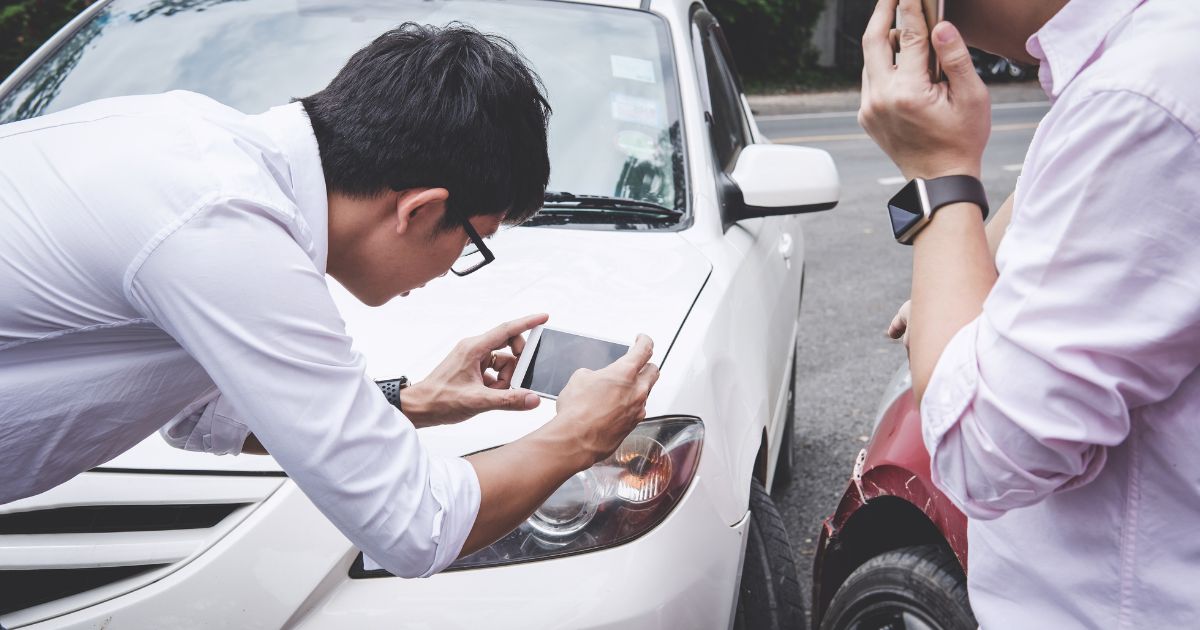
Doing so can leave you without the one piece of evidence that later matters most. A police report is prepared by a neutral party with no financial stake in the outcome, which gives it credibility that a personal account alone does not carry with an insurance adjuster. Officers who respond to a crash examine the scene, take photographs, speak with witnesses, and record statements from everyone involved, tasks that are difficult or impossible for you to reliably handle yourself while also dealing with the aftermath of a collision.
Common Situations Where a Police Report Becomes Critical
Certain types of crashes make a police report especially important. A hit-and-run accident, for example, generally cannot be pursued at all without an official report describing the fleeing vehicle and any available identifying details, since that report often becomes the primary evidence supporting a claim against your own uninsured motorist coverage. Multi-vehicle pileups, common on high-speed corridors during peak commuter hours, also benefit enormously from an officer’s independent assessment of how each vehicle was positioned, since drivers involved in a chain-reaction crash rarely agree on the sequence of events afterward.
Accidents involving a suspected impaired driver present another situation where police involvement is not optional in any practical sense. An officer at the scene can administer field sobriety tests and document signs of impairment in ways that are simply unavailable to a private citizen, and that documentation often becomes central to both the criminal case against the driver and any civil claim you later pursue.
Rear-end collisions at traffic signals, common along corridors like Central Avenue and 4th Street North, present yet another situation where a police report tends to matter more than drivers expect. Even when fault seems obvious to everyone at the scene, the driver who caused the crash may later dispute basic facts once an insurance company gets involved, and having an officer’s independent account on record removes much of the room for that kind of dispute to develop.
Reason One: A Police Report Documents Evidence While It Is Still Fresh
Memories fade, vehicles get repaired, and physical evidence at the scene disappears within hours. A responding officer captures the location, the time and date, the position and damage of each vehicle, and statements from drivers and witnesses while all of that information is still accurate and available. Later, when an insurance company or an attorney needs to reconstruct what happened, the police report is often the closest thing to a snapshot of the accident scene itself.
This matters even when injuries or damage seem minor at first. Some of the most common car accident injuries do not become apparent until hours or days later, and by then, the opportunity to document the scene firsthand is gone. A police report preserves that window of time regardless of how your symptoms develop afterward.
Vehicles are often repaired or sold within days of a crash, which means physical evidence of impact speed and angle disappears quickly as well. An officer’s notes and photographs, taken before any repairs begin, can later help an accident reconstruction professional or an attorney understand exactly how the collision unfolded, even months after the vehicles themselves are no longer available for inspection.
Reason Two: A Police Report Can Reveal Red Flags About the Other Driver
It is common practice to exchange insurance information with the other driver immediately after a crash, but that exchange alone does not tell you everything you need to know. If the other driver pushes back on calling the police, even after a seemingly minor collision, it is worth treating that request as a red flag rather than a convenience. A driver who wants to avoid police involvement may be trying to hide that they do not have a valid license, are not carrying insurance, have an outstanding warrant, or are impaired in some way. Given that Florida has one of the higher rates of uninsured drivers in the country, confirming insurance status through an official report, rather than taking a driver’s word for it, is not an overly cautious step. It is a reasonable precaution that protects you if that information later turns out to be inaccurate.
Any of these circumstances is a legitimate reason to involve law enforcement rather than handling the matter privately. A driver who poses that kind of risk to others on the road should not be given the opportunity to avoid accountability simply because the crash felt survivable at the time. An officer at the scene can identify these issues in ways that are simply not available to you as a private citizen exchanging information in a parking lot or on the side of the road.
Even when nothing about the other driver seems unusual at first, an officer’s presence changes the dynamic of the conversation. People are generally more careful about what they say, and more consistent in their account of events, when they know a neutral third party is documenting the exchange. That alone can prevent a dispute over basic facts, such as which vehicle had the right of way, from ever becoming a serious problem later in the claims process.
Reason Three: A Police Report Strengthens Your Insurance and Legal Claim
The information a responding officer gathers becomes central to the success of almost any claim that follows. Even if you are not sure yet whether you will pursue a claim, having documented evidence that the accident occurred, and how it occurred, protects your options later. A police report can help establish which driver was at fault, and it serves an important purpose whether your losses involve injury, property damage, or both.
If you eventually work with a car accident attorney to dispute fault in your claim, that attorney will rely heavily on the police report to piece together what happened and to counter any attempt by an insurance company to shift blame onto you. If you choose to handle a claim on your own instead, your own insurance company will very likely ask you to provide a copy of the report before it will process your claim at all.
Insurance adjusters are trained to look for any inconsistency between your account of the crash and the official record. A detailed, accurate police report reduces the room for an adjuster to argue that your version of events does not match what happened, which is one of the most common tactics used to minimize or delay a claim. Without that report, disputes over fault often come down to one driver’s word against another’s, a position that rarely favors the person seeking compensation.
What Information a Police Report Typically Contains
A police report functions as an unbiased record of the crash, generally including the accident location, the date and time it occurred, a description of the damage each vehicle sustained, statements from drivers and witnesses, and identifying information for everyone involved. Insurance adjusters and attorneys alike treat this information as a starting point for evaluating a claim, which is exactly why having a complete, accurate report matters so much. Some reports also include a preliminary assessment of contributing factors, such as whether a driver appeared to be speeding, ran a red light, or was cited for a traffic violation connected to the crash. While that assessment is not the final word on fault, it often shapes how an insurance company initially approaches the claim.
Florida Law Requires Reporting Certain Crashes
Beyond the practical benefits described above, Florida law makes reporting a legal obligation in many circumstances. Under Section 316.065, Florida Statutes, a driver involved in a crash must report it to local law enforcement when any of the following applies:
- Property damage of at least $500. This threshold is lower than many drivers assume, and it does not take significant damage to reach it.
- A person is injured. Reporting is required regardless of how minor the injury may initially appear.
- A person dies as a result of the crash. This applies even if the death is not immediately apparent at the scene.
- A vehicle is towed from the scene. If a vehicle cannot be driven away under its own power, the crash generally must be reported.
Because it can be difficult to accurately estimate vehicle damage or assess whether anyone was hurt in the immediate aftermath of a crash, the safer approach is to report every accident to local police rather than trying to judge in the moment whether the legal threshold has been met.
Penalties for Failing to Report a Crash
Failing to report a crash that meets Florida’s threshold is treated as a noncriminal traffic infraction. Beyond that legal exposure, the practical cost of skipping a required report is usually far greater than any fine, since you lose the documentation an insurance company or attorney would otherwise rely on to evaluate your claim. Reporting a crash properly the first time avoids both problems at once. The Florida Department of Highway Safety and Motor Vehicles also maintains general guidance on what to do when you are involved in a crash, including how reporting requirements interact with your insurance obligations under the state’s no-fault system.
How to Get a Copy of Your Florida Accident Report
Once a report has been filed, you or your attorney will typically need an official copy of it to move a claim forward. If you were involved in a crash and are not sure how to request your own report, we have put together a separate guide explaining how to get a copy of your Florida accident report, including where to request it and what information you will need to provide. Reports are generally available through the investigating agency, whether that is the local police department, the county sheriff’s office, or the Florida Highway Patrol, and processing times can vary depending on the volume of crashes that agency handles.
Requesting your report as soon as it becomes available lets you or your attorney review it for accuracy while the details are still easy to verify. If anything in the report appears incorrect, such as a misidentified vehicle or an incomplete witness list, addressing that discrepancy early is generally far easier than trying to correct the record after an insurance company has already relied on it to evaluate your claim. Most agencies now offer an online portal for requesting a copy, though older crashes or reports involving ongoing investigations may still require a request submitted by mail or in person.
How Marsalisi Law Can Help After Your Accident
If you suffered any type of loss after a car accident, whether an injury, property damage, or lost wages from missed work, you may have a claim worth pursuing. We work on a contingency fee basis, meaning our firm is paid only if we recover monetary compensation for you, and we handle communications with insurance adjusters so you can focus on your recovery instead of negotiating on your own. Attorney Frank P. Marsalisi was born and raised in St. Petersburg and has represented car accident victims throughout the area for more than 18 years, personally reviewing the facts of every case rather than handing new clients off to a paralegal.
Frank is fluent in both English and Spanish, and he built his practice around giving clients direct access to the attorney handling their case rather than a rotating cast of case managers. That approach is reflected in more than 300 five-star Google reviews from clients throughout Pinellas County and the greater Tampa Bay region, built over more than 18 years of reviewing police reports, negotiating with insurance adjusters, and litigating car accident claims when a fair settlement cannot be reached.
Do not wait until medical bills start piling up to seek legal advice. Evidence connected to your accident, including the police report itself, becomes harder to gather the longer you wait, and Florida’s filing deadlines do not pause while you decide what to do next. If you were involved in a car accident, complete our contact form for a free consultation, and let us help you understand your options while the evidence from your accident is still fresh. Marsalisi Law is Where Law Gets Personal.
Frequently Asked Questions About Police Reports After a Car Accident
Do I have to call the police after every car accident in Florida?
Florida law requires you to report a crash to local law enforcement when there is at least $500 in property damage, an injury, a death, or when a vehicle must be towed from the scene. Because it can be hard to judge damage or injuries accurately in the moment, the safer practice is to call the police after any accident, regardless of how minor it initially seems.
What happens if I do not report a car accident to the police?
Failing to report a crash that meets Florida’s reporting threshold is a traffic infraction, and beyond that legal risk, you lose the official documentation that an insurance company or attorney would otherwise rely on to support your claim. Without a police report, proving what happened, and who was at fault, generally becomes considerably more difficult.
Can I still file an insurance claim if I did not call the police?
It may still be possible to file a claim without a police report, but doing so is generally more difficult, since you will need other evidence to establish that the accident occurred and how it happened. Photos of the scene, witness contact information, and prompt medical records can help fill some of that gap, though a police report remains the strongest single piece of documentation in most cases.
What should I do if the other driver asks me not to call the police?
Treat this request as a reason to call the police, not a reason to skip it. A driver who does not want law enforcement involved may be trying to avoid consequences related to their license, insurance status, or impairment. Reporting the accident protects your own legal rights regardless of why the other driver would prefer to avoid an official record.
How soon after an accident should I get a copy of the police report?
Reports are not always available immediately, since it can take investigating agencies some time to finalize the paperwork after a crash. Requesting your report as soon as it becomes available allows you or your attorney to begin reviewing it for accuracy and using it to support your claim without unnecessary delay.
About the Attorney
Founder, Marsalisi Law
Frank P. Marsalisi is a bilingual trial lawyer born and raised in St. Petersburg, Florida, and the founder of Marsalisi Law. He has spent more than 18 years representing motorcycle, automobile, and other accident victims throughout the Tampa Bay region, personally handling each case from the initial consultation through resolution. Frank holds a Juris Doctor from the University of Pittsburgh School of Law and has been a member of The Florida Bar since 2008.