Legally Reviewed by Frank P. Marsalisi on September 1, 2026
The most important thing to do after a rideshare accident in Florida is to seek medical attention and make sure a police report is filed, since both steps protect your health and preserve the evidence needed to support a claim, regardless of whether the rideshare driver, another motorist, or the rideshare company’s insurance ultimately turns out to be responsible. Rideshare crashes involve more moving parts than a typical two-car collision, which makes the steps you take in the first hours and days matter even more, particularly because more than one insurance policy is often involved before anyone can tell you with certainty who is expected to pay for what.
At Marsalisi Law Firm, our rideshare accident attorneys help injured passengers, drivers, and other accident victims sort through the layered insurance coverage that comes with an Uber or Lyft crash, so you are not left guessing which policy is supposed to pay for your injuries.
What Counts as a Rideshare Accident in Florida
A rideshare accident includes any crash involving a driver working for a transportation network company such as Uber or Lyft, whether that driver was waiting for a ride request, actively on the way to pick up a passenger, or transporting a passenger to their destination. You may be involved as the rideshare passenger, the driver of another vehicle struck by a rideshare car, a pedestrian or cyclist, or even a passenger in a separate vehicle involved in the crash.
What makes these crashes different from an ordinary car accident is the layered insurance structure behind them. Depending on exactly what the rideshare driver was doing in the app at the moment of the crash, a different insurance policy, and sometimes a different coverage tier entirely, may apply. Sorting out which tier applies is often the first real obstacle to getting your claim resolved.
Common Rideshare Accident Scenarios
Some of the most frequent rideshare accident scenarios include a rideshare vehicle being rear-ended or T-boned by another driver while carrying a passenger, a rideshare driver causing a crash while distracted by the navigation app or a new ride request, and a rideshare car striking a pedestrian or cyclist while circling a pickup location downtown. Each of these situations can involve a different mix of insurance policies, which is why treating every rideshare crash the same way as an ordinary fender bender often leads to confusion about who is actually supposed to pay.
Weather and traffic conditions common to St. Petersburg, including sudden afternoon storms and heavy tourist congestion near the beaches and downtown entertainment districts, add another layer of risk for rideshare drivers who may be relying on an app for directions in an unfamiliar area rather than local knowledge of the roads. A driver watching a phone mounted on the dashboard for turn-by-turn directions, or glancing down to accept a new ride request, faces many of the same distraction risks that make texting behind the wheel dangerous for any motorist.
Steps to Take After a Rideshare Accident in Florida
If you have been involved in a rideshare accident, whether as a passenger, another driver, or a pedestrian, the following steps can help protect both your health and your legal options:
- Seek medical attention right away. Some injuries do not present themselves until hours or days later, and prompt care creates a medical record connecting your injuries to the crash.
- Report the accident to law enforcement. A police report documents the scene, the vehicles involved, and initial statements, and it becomes an important piece of evidence in any later claim.
- Report the accident within the rideshare app. Both Uber and Lyft have an in-app process for reporting a crash, which helps establish that the driver was logged into the app or actively transporting a passenger at the time.
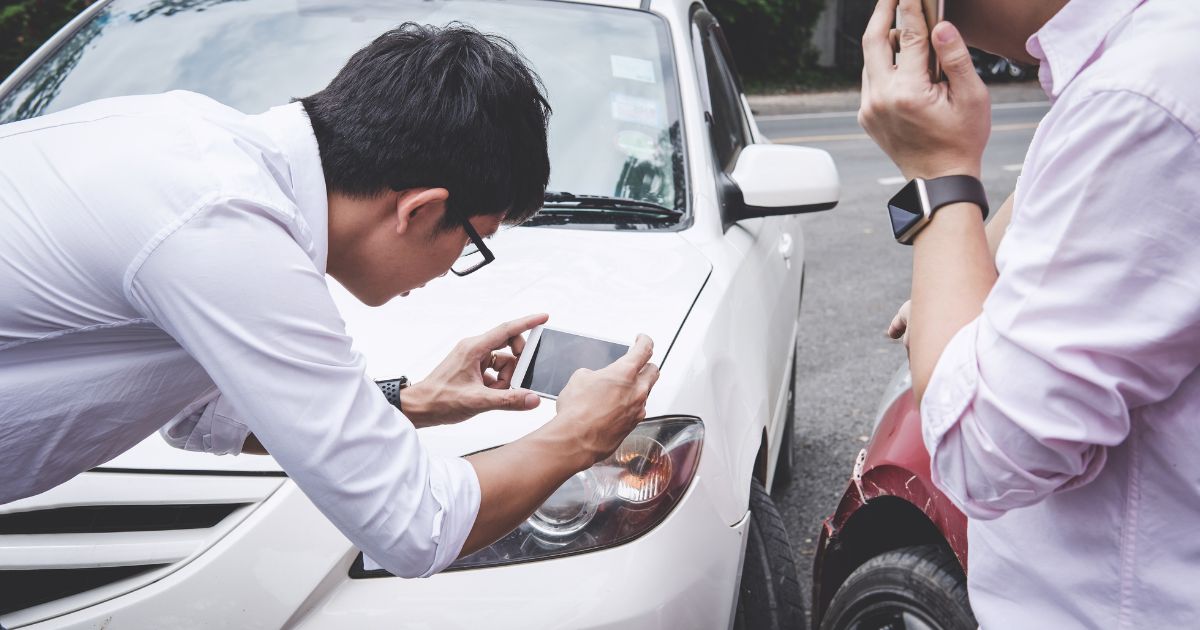
- Document everything at the scene. Take photos of all vehicles, visible injuries, and the surrounding area, and get contact information from any witnesses before they leave.
- Avoid giving a recorded statement without legal advice. Insurance representatives, including the rideshare company’s insurer, may contact you quickly, and anything you say can later be used to minimize your claim.
- Speak with a rideshare accident attorney before accepting any offer. An attorney can help identify every available policy and confirm which coverage tier applies to your specific crash.
Taking these steps in the days immediately following a crash generally puts you in a far stronger position than waiting to see how you feel before deciding whether to act. Even if you are not sure yet whether you plan to pursue a claim, preserving this evidence early costs you little and keeps your options open while you focus on getting the medical care you need.
Who Can Be Held Liable After a Rideshare Accident
Determining who is responsible for a rideshare accident is rarely as simple as it is in a standard two-car collision. The rideshare driver may be liable if their own negligence, such as speeding, distracted driving, or an unsafe lane change, caused the crash. Another motorist entirely unconnected to the rideshare company may instead be the at-fault party, in which case that driver’s own liability insurance is typically the first source of recovery. In some cases, a vehicle or parts manufacturer, a government entity responsible for road maintenance, or another passenger or pedestrian may share some responsibility for what happened.
Because Uber and Lyft classify their drivers as independent contractors rather than employees, the rideshare company itself is rarely named directly as a defendant, though its insurance policy is often a critical source of recovery depending on what the driver was doing in the app at the time of the crash. Identifying every potentially responsible party, and every applicable policy, is one of the most valuable things a car accident attorney can do for your claim, whether the crash also involved a driver outside the rideshare app entirely.
If you were riding as a passenger rather than driving, you may also have questions specific to your situation, including whether you can file a claim as a rideshare passenger when you were not the one operating either vehicle. In many cases, the answer is yes, since passengers are rarely assigned any fault for a crash they did not cause.
Pedestrians and cyclists struck by a rideshare vehicle face a similar analysis, though they typically have no direct relationship with the rideshare app at all. Their claim generally proceeds against whichever driver caused the crash and that driver’s applicable coverage, whether it is the rideshare driver’s own policy, the rideshare company’s coverage, or both, depending on what the driver was doing in the app when the crash occurred.
Florida’s Rideshare Insurance Law: Understanding the Coverage Tiers
Florida law, under Section 627.748, Florida Statutes, requires transportation network companies to carry specific insurance coverage that depends entirely on what stage of a ride the driver was in when the crash occurred. Understanding these tiers is often the key to figuring out which policy actually applies to your accident.
If the rideshare driver was not logged into the app at all, only the driver’s personal auto insurance applies, the same as with any other private vehicle. If the driver was logged in and available for a ride but had not yet accepted one, Florida law requires the rideshare company to provide contingent liability coverage of at least $50,000 for bodily injury per person, $100,000 per accident, and $25,000 for property damage. Once the driver has accepted a ride request or is actively transporting a passenger, Florida law requires at least $1,000,000 in liability coverage to be in place, which is typically the highest tier of coverage available in a rideshare accident claim.
Confirming exactly which tier applies to your crash usually requires app data showing the driver’s status at the time of the collision, which is one more reason prompt documentation and a clear timeline matter so much in these cases.
Even when the highest coverage tier applies, that policy is not automatically the only source of recovery available to you. If your injuries exceed what the rideshare company’s policy pays, your own uninsured or underinsured motorist coverage, where you carry it, may fill part of the gap, and the rideshare driver’s personal auto policy may apply in some circumstances as well. Comprehensive and collision coverage on your own vehicle, if you were driving a separate car involved in the crash, is a separate question from the liability coverage discussed here and depends entirely on your own policy.
It is also worth noting that a standard personal auto insurance policy often excludes coverage for commercial ridesharing activity unless the driver has purchased a specific rideshare endorsement. This gap is part of why Florida requires transportation network companies to provide the tiered coverage described above, since it fills the space that many personal policies leave open once a driver logs into a rideshare app to earn money.
How Fault and Compensation Work in a Rideshare Claim
Florida’s no-fault insurance system means that your own Personal Injury Protection coverage, or the rideshare company’s PIP-equivalent coverage where applicable, generally pays a portion of your initial medical bills regardless of who caused the crash. That no-fault structure covers only a limited amount of your medical expenses and lost wages, however, and it does not resolve the separate question of who was at fault for the crash, which still matters for any claim beyond PIP, including pain and suffering and damages that exceed your PIP limits.
Florida follows a modified comparative negligence rule, meaning your compensation is reduced by your percentage of fault, and you are barred from recovering anything if you are found more than 50 percent at fault. Passengers are almost never found at fault for a crash they did not cause, but drivers and pedestrians involved in a rideshare accident may still face a dispute over who was liable in a car accident, which is why what you say at the scene and to insurance adjusters afterward matters as much in a rideshare crash as it does in any other collision.
Multiple insurance companies are frequently involved in a single rideshare claim at once, including the rideshare company’s insurer, the driver’s personal insurer, and any other driver’s insurer, and each may attempt to point to the others as the party responsible for payment. Untangling that back-and-forth is often the single most time-consuming part of a rideshare accident claim, and it is one of the main reasons these cases tend to take longer to resolve than a straightforward two-car crash.
Common Mistakes That Can Hurt Your Rideshare Accident Claim
A few avoidable mistakes tend to come up again and again in rideshare accident claims. Accepting the first settlement offer from an insurance company before you understand the full extent of your injuries is one of the most common, since early offers rarely account for medical treatment, lost wages, or pain and suffering that only becomes clear over time. Discussing the crash on social media, or giving a recorded statement to an insurer before speaking with an attorney, can also create statements that are later used to minimize your claim. Waiting too long to report the crash within the rideshare app can likewise make it harder to confirm which coverage tier applies once a dispute arises.
Deleting the rideshare app, or failing to take a screenshot of your ride history, can also make it harder to later prove that a ride was in progress at the time of the crash. Saving your trip receipt, screenshots of the ride details, and any in-app messages related to the accident as soon as possible after the crash preserves evidence that can otherwise become difficult to retrieve later.
How Marsalisi Law Can Help After a Rideshare Accident
Sorting out which insurance policy applies, and pursuing the parties actually responsible for a rideshare crash, generally requires gathering app data, crash reports, and insurance information from several different sources at once. We handle that investigation directly, identify every available source of recovery, and manage communications with insurance adjusters so you are not left negotiating alone while you are still recovering. This matters just as much when the at-fault party turns out to carry little or no insurance of their own, since a rideshare crash can still involve an uninsured driver on the other side of the collision. Personal injury Attorney Frank P. Marsalisi personally reviews the facts of every potential rideshare case rather than assigning it to a case manager, tracking down the app data, crash report, and coverage information needed to build your claim from the ground up.
Frank P. Marsalisi is a bilingual trial lawyer who was born and raised in St. Petersburg and has spent more than 18 years representing accident victims throughout Pinellas County and the greater Tampa Bay region, including passengers and drivers injured in Uber and Lyft accidents. Rather than passing new clients off to a paralegal, Frank personally reviews the facts of your case from the first consultation through resolution, an approach reflected in more than 300 five-star Google reviews and years of experience untangling the layered insurance disputes that make rideshare claims different from an ordinary car accident case.
If you were injured in a rideshare accident, our team can help you sort out which insurance policy applies and what your options may be. Reach out through our contact form to schedule a free consultation, with no obligation to move forward.
Frequently Asked Questions About Rideshare Accidents in Florida
What should I do immediately after a rideshare accident in Florida?
Seek medical attention, report the crash to law enforcement, and report it within the rideshare app as soon as possible. Document the scene with photos, collect contact information from any witnesses, and avoid giving a recorded statement to any insurance company until you have spoken with an attorney. These steps help establish a clear record of what happened and which coverage tier may apply to your claim.
Who pays for my injuries if I am hurt as a passenger in an Uber or Lyft accident?
The applicable coverage depends on what the driver was doing in the app at the time of the crash. If the driver had accepted your ride or was transporting you, Florida law requires the rideshare company to maintain at least $1,000,000 in liability coverage. Your own Personal Injury Protection coverage, if you have it, may also apply to initial medical bills regardless of fault. An attorney can help confirm exactly which policies apply to your specific situation.
Is Uber or Lyft responsible if their driver causes an accident?
Rideshare companies generally classify their drivers as independent contractors rather than employees, which affects how liability works. That said, Florida law requires rideshare companies to maintain specific insurance coverage that applies once a driver is logged into the app, and that coverage is often the primary source of recovery in a claim, even when the company itself is not named directly as a defendant.
Can I still file a claim if the rideshare driver was not at fault for the accident?
Yes. If another driver caused the crash while you were riding in an Uber or Lyft, you may still pursue compensation from that driver’s insurance, and in some cases from applicable rideshare coverage as well, depending on the policy terms. As a passenger, you are almost never found at fault for a crash you did not cause, which generally simplifies this part of your claim compared to disputes between two drivers.
How long do I have to file a claim after a rideshare accident in Florida?
Florida generally allows two years from the date of the crash to file a personal injury lawsuit, the same deadline that applies to most car accident claims. Rideshare claims can take longer to investigate because of the layered insurance involved, so speaking with an attorney as soon as possible after the crash gives you the most time to gather app data, witness statements, and other evidence before that deadline arrives.
About the Attorney
Founder, Marsalisi Law
Frank P. Marsalisi is a bilingual trial lawyer born and raised in St. Petersburg, Florida, and the founder of Marsalisi Law. He has spent more than 18 years representing motorcycle, automobile, and other accident victims throughout the Tampa Bay region, personally handling each case from the initial consultation through resolution. Frank holds a Juris Doctor from the University of Pittsburgh School of Law and has been a member of The Florida Bar since 2008.