Proving distracted driving in Florida injury claims comes down to showing that the driver wasn’t fully focused on the road at the time of the crash.
That evidence can come from a few places. Phone records are one of the most common, showing texts, calls, or app use right around the time of the accident. Police reports may note distractions or statements made at the scene. Witnesses can also confirm if the driver was looking down, swerving, or reacting late.
In some cases, traffic cameras or nearby surveillance footage help fill in the gaps. Patterns matter too. A rear-end crash or a delayed reaction at an intersection can support the claim that the driver wasn’t paying attention.
Distraction generally falls into three categories. A driver may be cognitively distracted when their focus shifts away from safe driving, visually distracted when their eyes leave the road, or manually distracted when their hands leave the steering wheel. Sending a single text message can involve all three at once.
Evidence You Can Gather at the Scene
If you are able, look for signs that the other driver may have been distracted before the crash. Examples of evidence include:
- A cell phone on the passenger seat that is still unlocked;
- A cell phone in the driver’s hand after exiting the vehicle;
- Fast food bags or wrappers near the driver’s seat;
- Loose makeup or a makeup bag near the driver’s seat; or
- A pet in the driver’s vehicle.
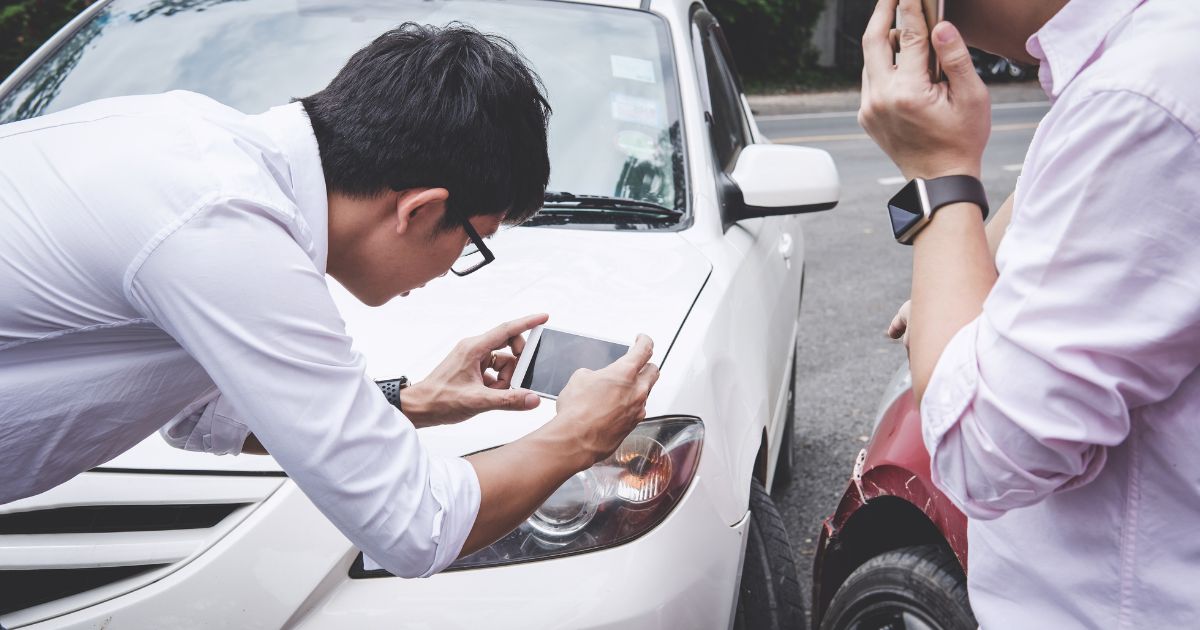
Take photos of what you see as soon as it is safe to do so, before items are moved or lost. Also get the names and contact information of any witnesses, or ask the police to collect them if you are unable, so that important testimony is not lost.
Social Media, Phone Records, and Vehicle Data
Social media activity can also show whether a driver was distracted. Public posts made in the minutes before or during a crash may be used as evidence, and this information is often easier to obtain than phone records that require a subpoena.
Many vehicles also have computer systems that log activity such as speed and control inputs, which can help show whether a driver was paying attention. While simply receiving a text message is not illegal in Florida, a message that arrived in the minutes before a crash can still be helpful evidence.
At Marsalisi Law, we focus on putting these pieces together quickly. Evidence doesn’t last forever, and the sooner it’s preserved, the stronger your case can be.
Insurance companies often argue that distraction can’t be proven. That’s not true. When evidence is gathered quickly and properly, a clear pattern of inattention can be established even without direct phone data.
The bottom line is this. You don’t have to prove exactly what the driver was doing on their phone. You just need to show they weren’t paying attention, and that distraction caused the crash.