Legally Reviewed by Frank P. Marsalisi on September 11, 2026
The first thing to do after a car accident is stop your vehicle, check for injuries, and call 911, even if the damage looks minor. What you do in the minutes and days that follow can affect both your health and your ability to recover compensation later, which is why it helps to know the full sequence of steps before you ever need them.
At Marsalisi Law, we have walked hundreds of car accident victims throughout St. Petersburg and Pinellas County through this process, and we regularly see the same early mistakes cost people money and stress later on. Below is a complete, step-by-step guide to what to do after a car accident in Florida, along with the legal context you need to understand your rights.
Stop Your Car and Check for Injuries
Florida law requires you to stop after any accident, whether you collided with another vehicle or a stationary object. This applies no matter how minor the damage looks. Once you have stopped in a safe location, check yourself and your passengers for injuries, and check on anyone else involved in the crash. Even if you feel fine, note how you feel in the following hours and days, since some injuries such as whiplash, concussions, and soft tissue damage often do not produce symptoms right away.
Call 911 and Request a Police Response
Call the police after any accident, regardless of how minor it seems. Under Florida law, a crash involving injury, death, or more than a minimal amount of property damage generally must be reported, and a responding officer will typically complete a crash report that becomes an important piece of evidence for your insurance claim. If anyone needs medical attention, tell the dispatcher so paramedics are sent along with law enforcement.
Florida requires law enforcement to submit crash reports to the Department of Highway Safety and Motor Vehicles, and drivers involved in a reportable crash have their own separate reporting obligations under Section 316.066, Florida Statutes. Do not assume that a minor-looking fender bender does not need to be reported. Skipping this step can make it much harder to establish what happened if a dispute arises later.
Watch What You Say at the Scene
Be careful about what you say to the other driver, witnesses, and even responding officers immediately after a crash. Avoid saying anything that could be read as taking on fault, including casual statements like “I’m fine” or “it’s okay,” since these can be repeated back to you later out of context. Limit your conversation to a basic exchange of information, and let the responding officer and any medical personnel handle the rest.
Gather Information at the Scene
While you wait for police and medical personnel, start gathering information you will need to file a claim. An officer’s crash report will capture much of this, but it is worth confirming the details yourself whenever it is safe to do so.
Information About the Other Driver and Vehicle
Collect the other driver’s name, address, phone number, driver’s license number, and insurance information, including the company name and policy number. Ask to see their insurance card so you can photograph it. Note the make, model, year, and license plate number of their vehicle, and record whether the other driver appears to be uninsured, since that changes how your claim will proceed.
Information About the Scene
Write down the date, time, and approximate address of the crash, the direction each vehicle was traveling, and the weather and visibility conditions. Get the name, badge number, and contact information for the responding officer, and collect contact information from any witnesses before they leave the scene.
Some of the most useful pieces of information to record at the scene include:
- Date and time the accident occurred, as precisely as you can determine it.
- Location, including the nearest cross street, mile marker, or landmark.
- Direction of travel for both your vehicle and the other vehicle before impact.
- Weather and lighting conditions at the time of the crash.
- Officer and witness contact information, including badge numbers where applicable.
These details can matter more than they seem to in the moment, especially if the other driver’s account of the accident changes later.
Take Photographs of Everything
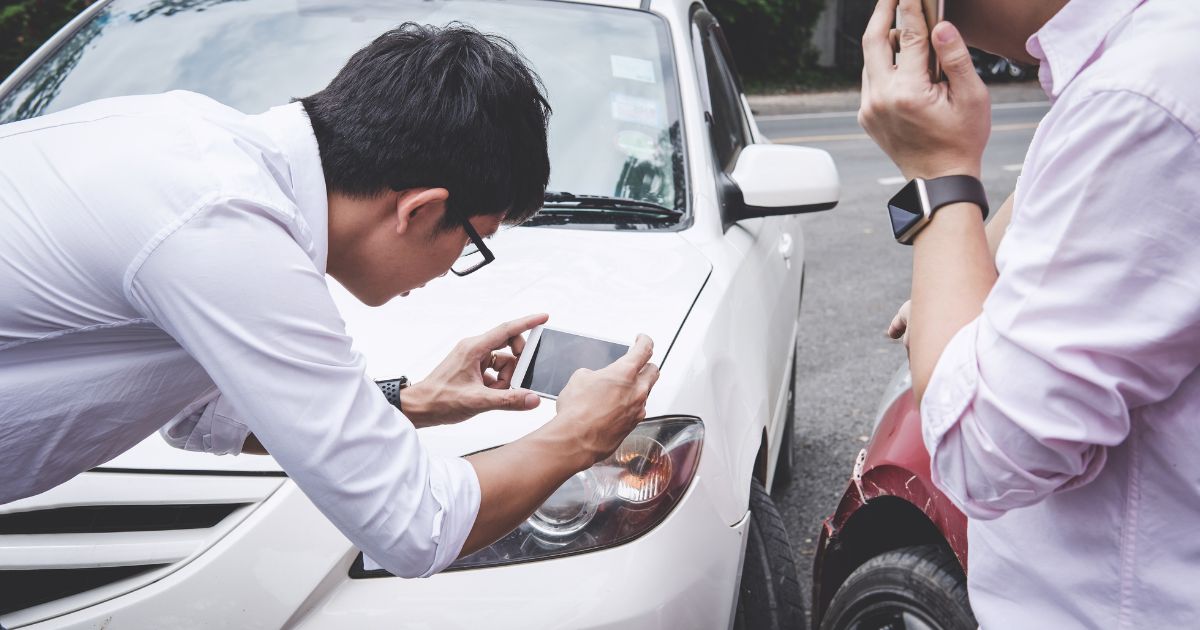
Photograph the accident scene, all vehicles involved, license plates, skid marks, road signs or signals, and any visible injuries. Take photos from multiple angles and distances. If your phone still works, a few extra minutes of documentation at the scene can be far more persuasive later than a written description alone.
Seek Medical Care Right Away
Seek medical attention as soon as possible after any accident, even if you feel only mildly sore. Florida’s no-fault insurance system requires that you seek initial medical evaluation within 14 days of a crash to preserve eligibility for Personal Injury Protection, or PIP, benefits under your auto policy. Beyond the insurance deadline, prompt medical care creates the documentation that connects your injuries directly to the accident, which becomes important if your treatment or your claim is later questioned. For more on how soft tissue and delayed-onset injuries can develop after a crash, see our related discussion of soft tissue injuries after a crash.
Notify Your Own Insurance Company
Contact your own insurance company promptly to report the accident and begin the claims process. You are generally required to notify your insurer of a crash regardless of fault. Stick to the facts when describing what happened, and avoid speculating about who was at fault or estimating the extent of your injuries before you have been evaluated by a doctor.
Do not, however, agree to give a recorded statement to the other driver’s insurance company without speaking to an attorney first. Adjusters are trained to ask questions designed to minimize what your claim may be worth, and an offhand comment can be used against you later. Contacting a car accident attorney in St. Petersburg before you engage with the other insurer can help protect your claim from the start.
Understand Florida’s Legal Deadlines and No-Fault System
Florida car accident claims move on a specific legal timeline. Under Section 95.11, Florida Statutes, as amended by House Bill 837 effective March 24, 2023, you generally have two years from the date of the crash to file a personal injury lawsuit, a deadline that was reduced from four years for accidents occurring before that date. Missing this window can permanently bar your claim, regardless of how strong the evidence is, so it is worth speaking with an attorney well before time runs short.
Florida also operates under a modified comparative negligence rule. If you are found more than 50 percent at fault for an accident, you may be barred from recovering compensation at all, and any recovery you are awarded is reduced by your own percentage of fault. Because insurers have a financial incentive to shift blame toward you, the steps described above, from watching what you say to gathering scene evidence, all help protect you against that risk.
What Compensation May Be Available After a Car Accident
Once you step outside Florida’s PIP coverage, either because your injuries meet the state’s serious injury threshold or because your medical bills exceed your PIP limits, you may be able to pursue additional compensation from the at-fault driver. Florida law generally allows recovery of two broad categories of damages. Economic damages cover measurable financial losses such as medical bills, lost wages, and property damage. Non-economic damages cover harder-to-quantify losses such as pain and suffering, emotional distress, and loss of enjoyment of life. In cases involving especially reckless conduct, such as a drunk driving accident, Florida courts may also consider punitive damages.
What any individual case may be worth depends on the severity of the injuries, the strength of the evidence, the degree of fault assigned to each driver, and the insurance coverage available. There is no set formula that applies to every accident, which is part of why the documentation steps described above matter so much.
Consider Speaking With a Personal Injury Lawyer
If your accident involved significant injuries, disputed fault, or an insurance company that is not cooperating, it is worth speaking with a personal injury lawyer before you accept any offer or sign any paperwork. A lawyer who focuses on car accident cases can help you understand what your claim may be worth, handle communications with insurers on your behalf, and make sure important deadlines are not missed. For a closer look at how this process typically unfolds locally, see our companion guide on what to do after a car accident in St. Petersburg.
Frequently Asked Questions About What to Do After a Car Accident
Do I need to call the police for a minor car accident in Florida?
In most cases, yes. Florida law generally requires a crash report when an accident involves injury, death, or significant property damage, and calling the police even for a seemingly minor collision creates an official record that can protect you later. It is best to treat every accident as one that should be reported rather than trying to judge severity yourself at the scene.
How long do I have to file a car accident claim in Florida?
Florida’s statute of limitations for most car accident injury claims is two years from the date of the crash, under Section 95.11, Florida Statutes, as amended by House Bill 837 effective March 24, 2023. Missing this deadline generally bars you from filing a lawsuit at all, so it is important to speak with an attorney well before the two-year mark.
Should I speak with the other driver’s insurance company?
You are not required to give a recorded statement to the other driver’s insurance company, and it is generally best to avoid doing so without first speaking to an attorney. Insurance adjusters are trained to ask questions designed to reduce what your claim may be worth, and even a casual comment can be used against you during the claims process.
What if I do not feel injured right after the accident?
Many common accident injuries, including whiplash, concussions, and soft tissue damage, do not produce noticeable symptoms until hours or days later. Florida’s no-fault insurance system also requires you to seek initial medical evaluation within 14 days of a crash to preserve your Personal Injury Protection benefits, so it is best to get checked out even if you feel fine at the scene.
When should I hire a car accident lawyer?
It is generally worth speaking with a car accident lawyer as soon as possible after any accident involving significant injuries, disputed fault, or an uncooperative insurance company. Involving an attorney early can help you avoid common mistakes, such as giving a recorded statement before understanding your rights, and can help make sure important legal deadlines are not missed.
Talk to a St. Petersburg Car Accident Attorney
Frank P. Marsalisi has spent his career representing car accident victims throughout St. Petersburg and the greater Tampa Bay region, and he personally handles every case from the first consultation forward. He and his team are fluent in English and Spanish, so clients can discuss the details of their accident in whichever language they are most comfortable using.
If you have been injured in a car accident, you do not have to figure out the claims process alone. Contact us at Marsalisi Law today to talk through what happened and understand your options moving forward.
About the Attorney
Founder, Marsalisi Law
Frank P. Marsalisi is a bilingual trial lawyer born and raised in St. Petersburg, Florida, who founded Marsalisi Law in 2014 to provide personal, client focused representation to car accident victims throughout the Tampa Bay region. He is a member of the Florida Justice Association and the Tampa Bay Trial Lawyers Association and was admitted to the Florida Bar in 2008.