
Home » Largo Personal Injury Lawyer » Pedestrian Accident
Pedestrians have no protection when a driver fails to yield, runs a red light, or drifts out of a lane, and the injuries that result from these collisions are among the most severe seen in any personal injury case. In a community like Largo, where busy corridors such as East Bay Drive and Ulmerton Road see heavy daily traffic, the risk to walkers, joggers, and commuters crossing on foot is very real.
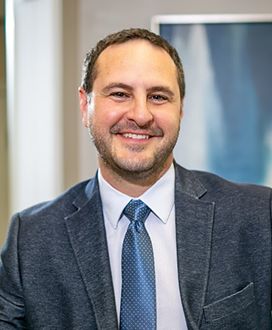
When a negligent driver causes serious harm to a pedestrian in Largo, Marsalisi Law is ready to step in and fight for the full monetary compensation the victim deserves. Frank P. Marsalisi is a bilingual personal injury lawyer with over 18 years of experience advocating for injured victims throughout Pinellas County, and he remains personally involved in every case throughout the claims process. Our firm has recovered millions of dollars for accident victims, and our more than 300 five-star Google Reviews reflect the genuine, one-on-one attention Frank gives to every client as the Largo personal injury lawyer trusted by families throughout the area.
Pedestrian accident cases involve a distinct set of legal considerations that set them apart from other motor vehicle claims, and understanding how Florida law applies to your situation is a critical first step.
Under Florida’s updated comparative fault laws, a pedestrian found to be more than 50 percent at fault for a crash may be barred from recovering any monetary compensation. Insurance companies are aware of this threshold and frequently attempt to shift blame onto the pedestrian to reduce or eliminate their liability. According to the Florida Department of Transportation, pedestrians and bicyclists represented 28 percent of traffic fatalities statewide between 2019 and 2023, underscoring the outsized danger these road users face and the importance of skilled legal advocacy when building your claim. Frank P. Marsalisi understands how these arguments are constructed and knows how to counter them effectively.
Liability in a pedestrian accident is not always straightforward. While a driver who fails to yield at a crosswalk is an obvious example, responsibility may also extend to a municipality that failed to maintain safe crossing infrastructure, a property owner whose overgrown landscaping obscured a pedestrian’s visibility, or a rideshare driver whose negligent behavior caused the collision. Identifying every potentially liable party is a task that requires thorough investigation, and it is one of the areas where the St. Petersburg pedestrian accident lawyer at Marsalisi Law has extensive experience.
The strength of a pedestrian accident claim depends heavily on what happens in the days and weeks immediately following the crash. Evidence deteriorates, surveillance footage is overwritten, and witness memories fade, making acting quickly essential to protecting your right to monetary compensation.
The following types of evidence are among the most valuable in a pedestrian accident case:
Gathering and preserving this evidence as early as possible can make a meaningful difference in the outcome of your case. Our team also reviews relevant answers to common legal questions through our pedestrian accident FAQs to help clients understand what to expect at each stage.
Frank P. Marsalisi has built his practice around a single guiding principle: every client deserves the same level of attention and dedication he would give to a member of his own family. That philosophy is especially important in pedestrian accident cases, where victims are often dealing with severe physical injuries, extended recovery periods, and mounting financial pressure while simultaneously navigating the claims process.
Frank regularly handles car accident cases in Largo and throughout Pinellas County, giving him a thorough understanding of the local roadways, traffic patterns, and the conditions most frequently contributing to serious pedestrian collisions. In cases where a pedestrian crash results in the loss of life, Marsalisi Law is also equipped to guide families through the process of pursuing a wrongful death claim in Florida with the compassion and diligence those families deserve.
The following are some of the most common questions we hear from pedestrian accident victims and their families in Largo.
A pedestrian accident victim may be entitled to monetary compensation for medical expenses, future treatment costs, lost income, reduced earning capacity, and pain and suffering. The specific value of a claim depends on the severity of the injuries, the degree of the driver’s fault, and the available insurance coverage. A thorough case evaluation with Frank P. Marsalisi is the best way to understand what your specific situation is worth.
Hit-and-run pedestrian accidents are tragically common in Florida. If the driver cannot be identified, you may still have options for recovering monetary compensation through your own uninsured motorist coverage or through other applicable insurance policies. Marsalisi Law has experience navigating these complex situations and works to identify every available avenue for recovery on your behalf.
The sooner you contact a personal injury lawyer after a pedestrian accident, the better positioned you are to preserve critical evidence and protect your claim. Florida’s statute of limitations for personal injury cases is two years from the date of the accident, but waiting until close to that deadline can significantly limit your legal options. Frank P. Marsalisi is available 24 hours a day, seven days a week, and there is no cost for an initial consultation.
Pedestrian accident victims in Largo deserve a lawyer who takes their case seriously and pursues every dollar of the monetary compensation they are owed. Frank P. Marsalisi is available around the clock and is committed to standing by your side from the very first conversation through the resolution of your claim.
Contact Marsalisi Law today to schedule your free consultation with a personal injury lawyer committed to fighting for you personally. Marsalisi Law is Where Law Gets Personal!
Marsalisi Law
Accessibility Statement
Compliance status
We firmly believe that the internet should be available and accessible to anyone, and are committed to providing a website that is accessible to the widest possible audience, regardless of circumstance and ability.
To fulfill this, we aim to adhere as strictly as possible to the World Wide Web Consortium’s (W3C) Web Content Accessibility Guidelines 2.1 (WCAG 2.1) at the AA level. These guidelines explain how to make web content accessible to people with a wide array of disabilities. Complying with those guidelines helps us ensure that the website is accessible to all people: blind people, people with motor impairments, visual impairment, cognitive disabilities, and more.
This website utilizes various technologies that are meant to make it as accessible as possible at all times. We utilize an accessibility interface that allows persons with specific disabilities to adjust the website’s UI (user interface) and design it to their personal needs.
Additionally, the website utilizes an AI-based application that runs in the background and optimizes its accessibility level constantly. This application remediates the website’s HTML, adapts Its functionality and behavior for screen-readers used by the blind users, and for keyboard functions used by individuals with motor impairments.
If you’ve found a malfunction or have ideas for improvement, we’ll be happy to hear from you. You can reach out to the website’s operators by using the following email
Screen-reader and keyboard navigation
Our website implements the ARIA attributes (Accessible Rich Internet Applications) technique, alongside various different behavioral changes, to ensure blind users visiting with screen-readers are able to read, comprehend, and enjoy the website’s functions. As soon as a user with a screen-reader enters your site, they immediately receive a prompt to enter the Screen-Reader Profile so they can browse and operate your site effectively. Here’s how our website covers some of the most important screen-reader requirements, alongside console screenshots of code examples:
Screen-reader optimization: we run a background process that learns the website’s components from top to bottom, to ensure ongoing compliance even when updating the website. In this process, we provide screen-readers with meaningful data using the ARIA set of attributes. For example, we provide accurate form labels; descriptions for actionable icons (social media icons, search icons, cart icons, etc.); validation guidance for form inputs; element roles such as buttons, menus, modal dialogues (popups), and others. Additionally, the background process scans all the website’s images and provides an accurate and meaningful image-object-recognition-based description as an ALT (alternate text) tag for images that are not described. It will also extract texts that are embedded within the image, using an OCR (optical character recognition) technology. To turn on screen-reader adjustments at any time, users need only to press the Alt+1 keyboard combination. Screen-reader users also get automatic announcements to turn the Screen-reader mode on as soon as they enter the website.
These adjustments are compatible with all popular screen readers, including JAWS and NVDA.
Keyboard navigation optimization: The background process also adjusts the website’s HTML, and adds various behaviors using JavaScript code to make the website operable by the keyboard. This includes the ability to navigate the website using the Tab and Shift+Tab keys, operate dropdowns with the arrow keys, close them with Esc, trigger buttons and links using the Enter key, navigate between radio and checkbox elements using the arrow keys, and fill them in with the Spacebar or Enter key.Additionally, keyboard users will find quick-navigation and content-skip menus, available at any time by clicking Alt+1, or as the first elements of the site while navigating with the keyboard. The background process also handles triggered popups by moving the keyboard focus towards them as soon as they appear, and not allow the focus drift outside it.
Users can also use shortcuts such as “M” (menus), “H” (headings), “F” (forms), “B” (buttons), and “G” (graphics) to jump to specific elements.
Disability profiles supported in our website
Additional UI, design, and readability adjustments
Browser and assistive technology compatibility
We aim to support the widest array of browsers and assistive technologies as possible, so our users can choose the best fitting tools for them, with as few limitations as possible. Therefore, we have worked very hard to be able to support all major systems that comprise over 95% of the user market share including Google Chrome, Mozilla Firefox, Apple Safari, Opera and Microsoft Edge, JAWS and NVDA (screen readers).
Notes, comments, and feedback
Despite our very best efforts to allow anybody to adjust the website to their needs. There may still be pages or sections that are not fully accessible, are in the process of becoming accessible, or are lacking an adequate technological solution to make them accessible. Still, we are continually improving our accessibility, adding, updating and improving its options and features, and developing and adopting new technologies. All this is meant to reach the optimal level of accessibility, following technological advancements. For any assistance, please reach out to